

Many Roblox players say they want to "go pro," but what they usually mean is that they want to stop feeling random. They want their good games to happen more often, their bad habits to show up less, and their results to reflect deliberate work instead of mood. That is a much better goal than chasing the word "pro" for status. Real competitive progress comes from reducing chaos. You build a process that makes improvement visible, then you repeat it until your baseline rises.
Competitive Roblox has its own flavor compared with traditional esports. Different games emphasize different mechanical skills, queue structures, pacing, team sizes, and match lengths. Some reward precision dueling. Others reward positioning, role discipline, utility timing, or map control. Because the platform is broad, you should avoid one-size-fits-all advice. Instead, use core principles that transfer across competitive titles. This guide focuses on those principles so you can improve no matter which ranked or tournament-focused Roblox game becomes your main title.
If you are still learning the platform itself, start with our Complete Roblox Beginner's Guide 2026 first. If you are still exploring which titles are worth serious time, our Top 25 Roblox Games to Play in 2026 can help you choose better competitive candidates. What follows is for players who already know they want structured improvement.
1. Mindset: train for consistency, not highlight clips
The fastest way to stall your progress is to confuse exciting moments with true skill. A huge carry, a lucky clutch, or a streak of perfect reads can feel like proof that you are leveling up. Sometimes it is proof. Often it is just variance. Competitive players improve when they judge themselves by repeatable decisions: positioning, timing, discipline under pressure, communication quality, and whether they understand why a round swung one way or another.
A useful mindset shift is to stop asking, "How cracked was I today?" and start asking, "How reliable was I today?" Reliability means you arrive on time, warm up properly, use the same settings, communicate clearly, and avoid emotional overreactions to short-term results. It also means accepting that progress is rarely linear. You may play better for two weeks, then hit a plateau because the game is now exposing deeper weaknesses. That is not failure. It is the next layer becoming visible.
Competitive mindset also requires emotional control. Tilt does not always look dramatic. Sometimes it looks like overpeeking, talking too much, forcing hero plays, queueing again without reflection, or changing settings after every loss. Calm players make cleaner decisions because they stay connected to the match instead of trying to erase their frustration in one moment. Treat composure as a skill. It is part of your mechanical ceiling because poor emotional control corrupts mechanics under pressure.
2. Settings optimization: remove friction before you practice
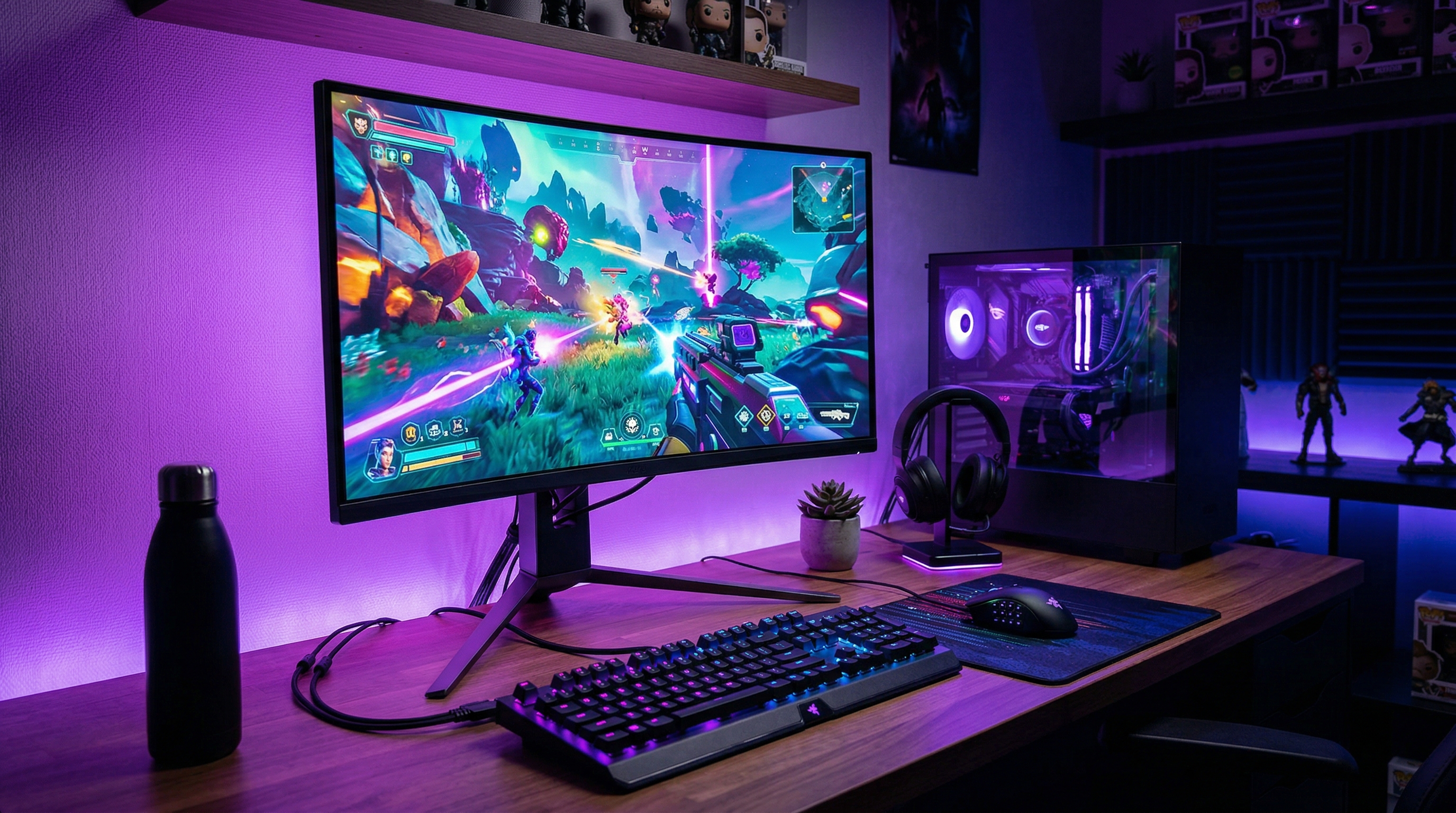
Players waste a lot of time practicing inside unstable conditions. Their sensitivity is changing every week. Their visual settings are inconsistent. Their audio balance makes key cues hard to hear. Their desk or seating setup changes from session to session. Then they wonder why their aim or reaction timing feels unpredictable. You do not need a luxury setup to compete well, but you do need repeatability.
Start with the obvious: a stable frame rate, readable visuals, and an input setup you can trust. Prioritize clarity over flashy effects. In competitive play, anything that makes targets harder to track, silhouettes less readable, or spatial cues less obvious is suspect. Use settings that help you identify motion quickly and maintain control under stress. If your game offers camera, field-of-view, crosshair, or sensitivity adjustments, make changes slowly and test them over several sessions instead of chasing instant perfection.
Hardware matters less than consistency, but consistency still includes hardware basics. A mouse or controller you know well, a keyboard position that does not strain your wrist, and a monitor angle that keeps your posture steady all matter more than constant gear swapping. If you play laptop-only, that is fine, but create one reliable arrangement and keep it. Competitive performance suffers when your body has to relearn the environment before it can focus on the game.
3. Training routines: structure practice around specific skills
"Playing a lot" is not the same thing as practicing well. Ranked queues can teach you, but only if you know what you are trying to improve. Otherwise, you are just collecting match volume and hoping results sort themselves out. Serious improvement comes from splitting your work into blocks. One block sharpens mechanics. One block sharpens decision-making. One block builds adaptation. One block is review.
A simple training routine works well for most players. Begin with a short warm-up focused on movement, tracking, aim timing, or any game-specific mechanic your title emphasizes. Then enter matches with one primary focus, such as trading correctly, holding better angles, surviving longer in key zones, or using utility on purpose instead of on instinct. After the session, write down one thing you improved and one thing that kept showing up as a weakness. Those notes become your next training targets.
The key is narrow focus. If you try to fix aim, positioning, comms, confidence, map knowledge, and clutch decision-making all in the same night, nothing will stick. Competitive players improve faster when each practice block has a theme. That theme can change across the week, but it should not change every round because you got annoyed.
Training also benefits from rhythm. Most players do better with shorter, intentional blocks than with marathon sessions that degrade into autopilot. Two high-focus hours with a clear goal usually beat five tired hours of queueing, especially when those five hours end with sloppy habits being reinforced. Quantity matters, but quality determines whether quantity is useful.
4. Team communication: make information actionable
Team comms are where many promising players separate themselves from dependable teammates. They speak often, but not clearly. Or they stay quiet because they fear saying the wrong thing. Neither extreme works. Good communication is brief, relevant, and timed so teammates can act on it. The goal is not to narrate your emotions. The goal is to improve the team's decision quality in real time.
Effective comms usually include four elements: location, number, condition, and intent. Where is the threat? How many? Are they weak, holding, rotating, or pressuring? What are you doing next? Even if your specific game uses different terminology, this framework travels well. A clean call lets teammates update their map in their head without asking follow-up questions mid-fight.
Comms discipline also means knowing what not to say. Do not flood the channel with blame, panic, or speculation that adds noise. Do not repeat outdated information after the fight has already shifted. Do not make a call sound certain if you only have partial info. Calm, accurate, low-drag comms win more rounds than loud confidence does. If you are building a stack or team, agree on a basic vocabulary so everyone describes the map the same way.
5. Tournament prep: create a routine before match day
Tournament performance is rarely just ranked performance with higher stakes. Bracket play adds pressure, scheduling, waiting time, adaptation between opponents, and more emotional volatility. Players who only train inside casual queues often struggle because they have never built a pre-match routine. Then they arrive tense, late, distracted, or still adjusting settings five minutes before the game starts.
Prepare your tournament day like a process. Confirm the format, start time, check-in rules, and communication platform early. Know who is responsible for joining, reporting, or contacting admins if a problem appears. Decide your warm-up window. Decide your final settings check. Decide what the team will review before the first match and what it will not waste energy on. The point is to remove avoidable decisions so all your attention can go into execution.
Teams should also prepare for pauses and momentum swings. A long wait between rounds can wreck focus if nobody has a plan. Use downtime for simple resets: hydrate, stand up, review one or two opponent tendencies, and confirm your opening priorities. Do not start a chaotic strategy debate minutes before the next match. Tournament prep is as much about preserving mental bandwidth as it is about building strategy.
6. Replay review: study decisions, not just outcomes
Replay review is one of the biggest advantages serious players can create for themselves because most players skip it. They remember the scoreline, remember the most emotional moments, and assume they understand what happened. Usually they do not. Replays show positioning errors, timing mistakes, poor spacing, missed trade opportunities, late rotations, and predictable habits that are invisible in the middle of live play.
The best review sessions stay focused. Do not try to review an entire week in one sitting. Pick one match or even one map. Ask clear questions. Where did we lose control? Which mistakes happened before the fight looked lost? Was the opening plan bad, or did execution break down? Did my death come from bad mechanics, bad positioning, or bad information? The more specific the question, the more useful the answer.
Review is also where ego can slow improvement. If you only watch replays to prove your teammates were wrong, you are wasting the tool. Start with your own decision chain. Were you late to support? Did you hold an angle too greedily? Did you ignore earlier information that should have changed your path? Honest self-review is difficult, but it creates leverage. You can actually train a problem once you can describe it clearly.
7. Common mistakes that keep players from breaking through
One common mistake is changing too much at once. A player loses three games and decides their sensitivity, role, schedule, team, and whole strategy need to change immediately. That kind of instability destroys useful feedback. Another mistake is overvaluing ranked badges without understanding whether your underlying habits would hold up in a stronger lobby or structured tournament.
Another major mistake is neglecting fundamentals because advanced tech looks more exciting. Fancy movement, rare lineups, aggressive entries, and high-risk flanks can all matter in the right context. But if your crosshair placement is weak, your spacing is inconsistent, and your comms are muddy, those advanced tools will not save you. Fundamentals are boring only until you face someone who has them cleaner than you do.
Some players also sabotage themselves by building an identity around being "the carry." Competitive games reward team value, not just visible kills. The player who gathers clean info, survives key moments, or makes a disciplined trade can be the real reason a team wins. If you only respect flashy impact, you will misread your own games and undervalue the skills that scale into higher-level play.
8. Build a weekly improvement system
The most useful competitive routine is one you can actually keep. A practical weekly system might include two focused mechanical sessions, two ranked blocks with one theme each, one replay review session, one team strategy session, and one rest or low-pressure day. That is enough structure to create momentum without turning the game into chaos or burnout.
During that week, track a small number of indicators. Did you warm up properly? Did you stick to the same settings? What recurring mistake appeared most often? What one behavior improved? Simple tracking beats vague ambition because it shows whether your process is becoming more stable. You do not need an elaborate spreadsheet unless you enjoy it. A short log after each session is enough.
It also helps to balance solo and team growth. Solo work sharpens accountability. Team work exposes coordination issues that solo queues hide. If you only do one or the other, your development becomes lopsided. Competitive players who last a long time usually know how to train both their own ceiling and their contribution to a group.
9. What to do next
If you want a stronger base before pushing into ranked play, revisit our Roblox Beginner's Guide and make sure your platform habits are clean. If you are still choosing which games deserve serious time, use our Top 25 Roblox Games to Play in 2026 to compare competitive options with the rest of the platform. If your long-term goal includes understanding map flow, readability, and how players move through pressure spaces, our Master Builder: Advanced Roblox Studio Tips will sharpen your eye from the creator side.
Going pro is not one leap. It is a chain of cleaner habits. Build a system you can repeat, review it honestly, and protect it from emotional noise. When you do that long enough, improvement stops feeling mysterious.